

Donibristle Estate
A Potted History of Donibristle House Over the Centuries
Contributor – Heritage Trail Brian
Picture Credit – Dalgety Heritage Trail, Muir Collection, Canmore, Mike Brown, Roy Cooksley, Helen Hampson, George
Hastie Collection, British Newspaper Archives
The original Donibristle House was a property owned by the Abbots of Inchcolme Abbey. James Stewart of Doune took up residence in 1540 when he became the ‘Commendator’ of Inchcolme Abbey. The Earl of Moray title wasn’t theirs yet, that didn’t come into play until James’s son James Stewart married Elizabeth Stuart, the 2nd countess of Moray in 1581, and as it was in those days, James assumed the title of Earl of Moray.
Over the centuries fire has been the scourge of our heritage with many buildings of national interest being lost along with their records, furniture and art collections and Dalgety parish has suffered that fate too with the loss of its parish records in 1897 when there was a fire at the manse and tragically multiple times at Donibristle House, none more so, than the act of arson and murder in 1592 when the ‘Bonnie Earl’ was slain.
Donibristle House was subject to a prophecy by a soothsayer who declared that it would be destroyed by fire three times which sadly came to pass when the replacement houses were burnt down in 1798 and 1858, see picture 1 from the Dundee Evening Telegraph from 9th of September 1949.
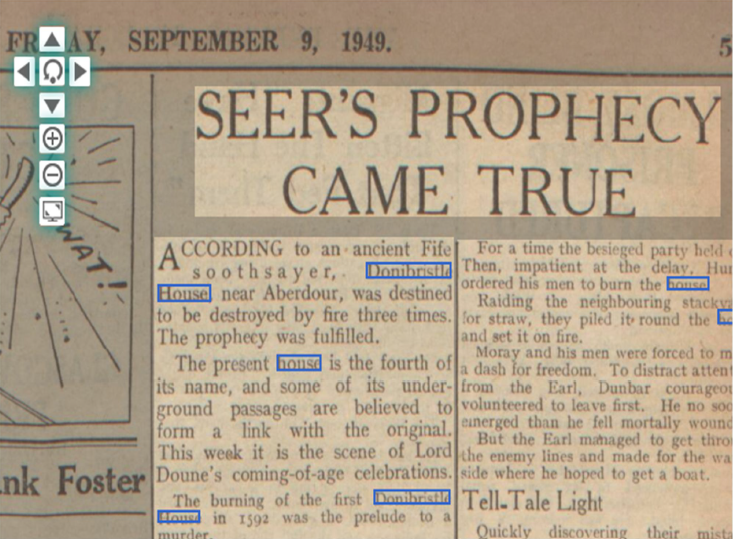
Picture 1: Newspaper article from The Dundee Evening Telegraph via British Newspaper Archives
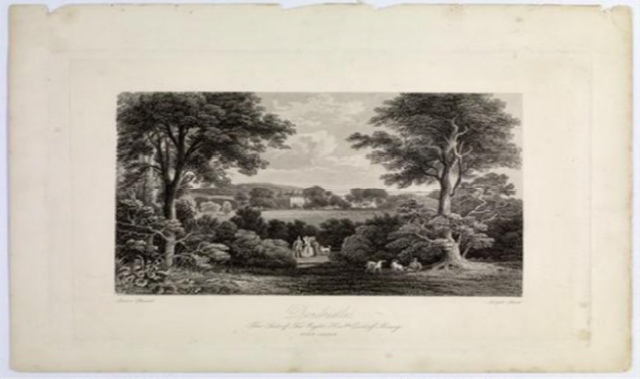
Picture 2: Engraved view of Donibristle House circa 1820 picture credit Canmore
Picture 2 is an illustration by James Stewart in 1840 from the ‘History of the county of Fife’ which shows how the estate had become a mature parkland stretching from the gates at Aberdour to close by St David’s. The Moray’s had expanded their lands over time by buying the Leuchat and Dalgety estates, in fact, the estate also took on the name of Donibristle Park. Picture 3 of the Airfield many years afterwards still showed the efforts put in by the Morays to landscape and beautify the estate.
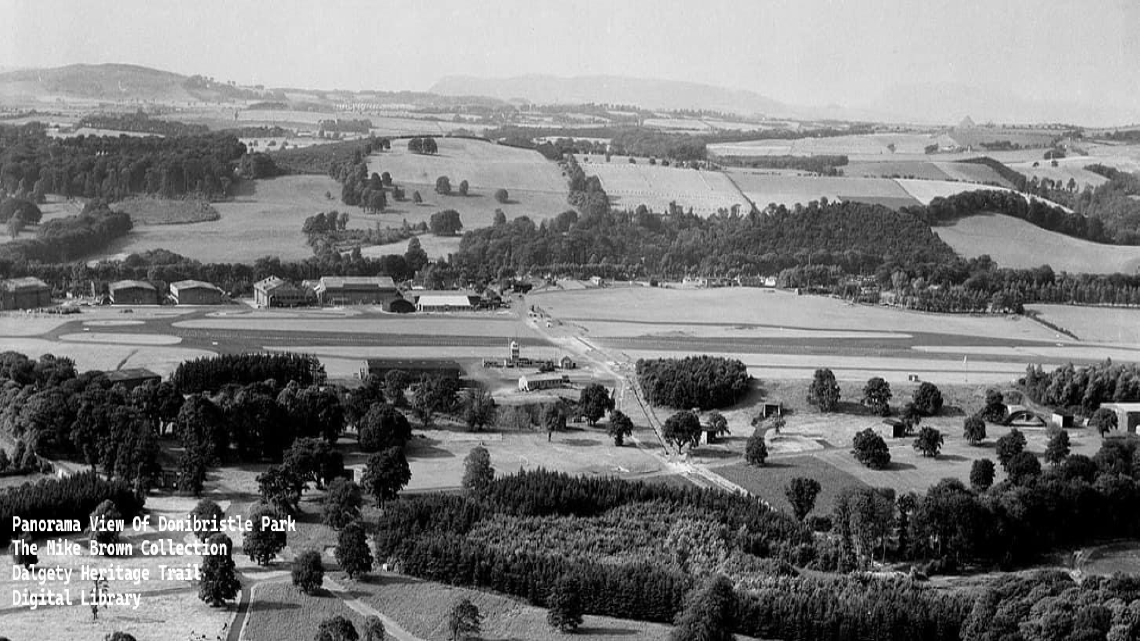
Picture 3: Panorama view of Donibristle Park credit Mike Brown

Picture 4: Donibristle House 1894, Credit The George Hastie Collection
The next fire at Donibristle House was in 1858 and was reported in the Falkirk Herald on the 6/4/1858:
‘The flames were first discovered by servants issuing from the top storey of the N.W corner of the building. Although the origin of the fire is not precisely known, the most likely is that it arose from the ignition of a beam of wood in proximity to a flue’.
Picture 4 from our digital library, taken in 1894, shows the horrific damage to the house in 1858.

Picture 5 Postcard Donibristle Park from the Brian Johnston Collection
The Dalgety Heritage Trail purchased this postcard for the digital library.It’s a postcard taken in 1905 by G.W Wilson. It had a curious title ‘Donibristle Park, from Hooper’s Point’ at first, we just thought it was a mistake as we had always known the point to be called Downing Point. We also did a quick check on Google and found a ‘Hooper’s Point’ in Pembrokeshire which we felt confirmed that it was a naming error. However, we have since found a newspaper article from the Inverness Courier, dated 13/3/1862, see picture 6, which reports a boat accident where two men drowned at Hooper’s Point at Donibristle House…. So, who is Hooper … who is Downing and why has the name changed … does anyone out there know?
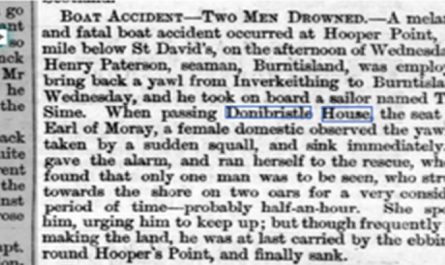
Picture 6: newspaper article from the Inverness Courier via British Newspaper Archives
The building went through another restoration in 1912. However, the war years took its toll with the estate grounds being used for the Donibristle Airfield and the house wings by the Admiralty and sadly the house fell into disrepair with further fires gutting the west wing in the 1980’s whilst under the ownership of Barratt Homes. Picture 7, taken by Rey Cooksley shows the dereliction of this once proud home especially when you compare it to the postcard donated by Helen Hampson (picture 8)

Picture 7 Picture Credit Rey Cooksley
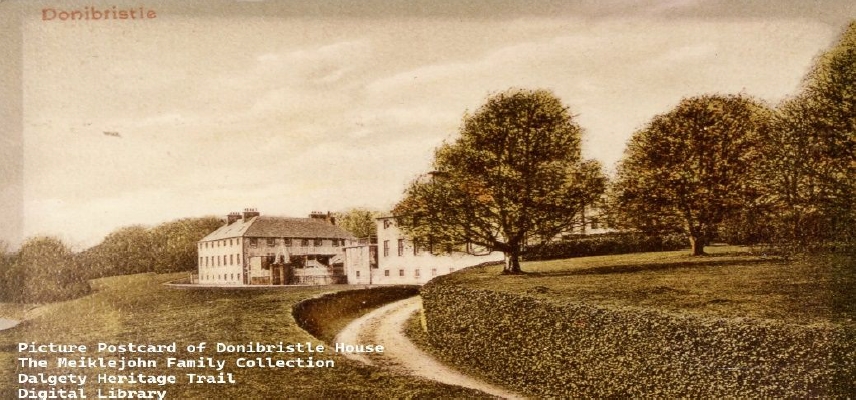
Picture 8: Postcard image from the Meiklejohn Collection
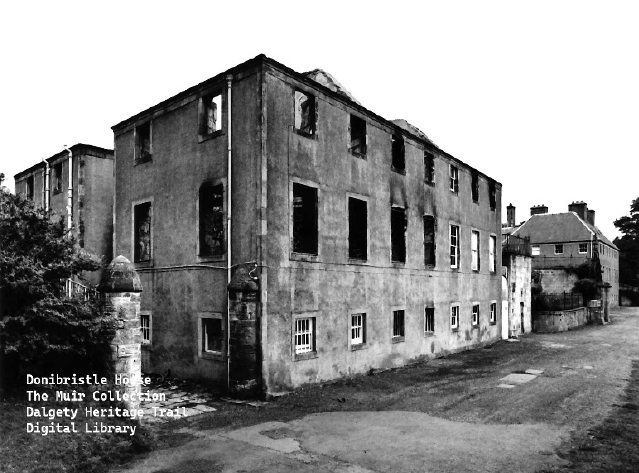
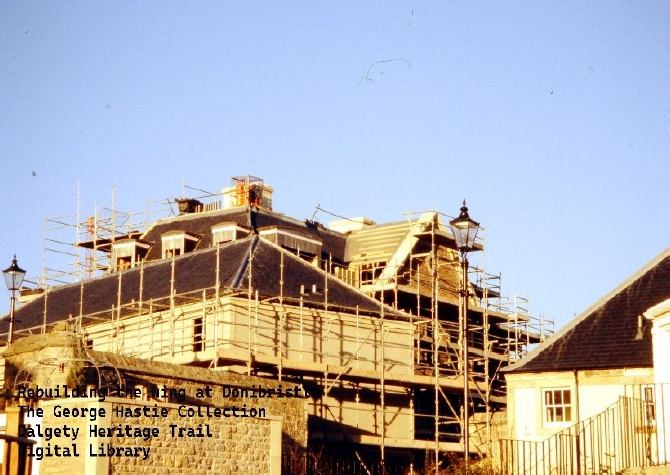
Picture 9 and 10: From the Muirs and George Hastie Collections
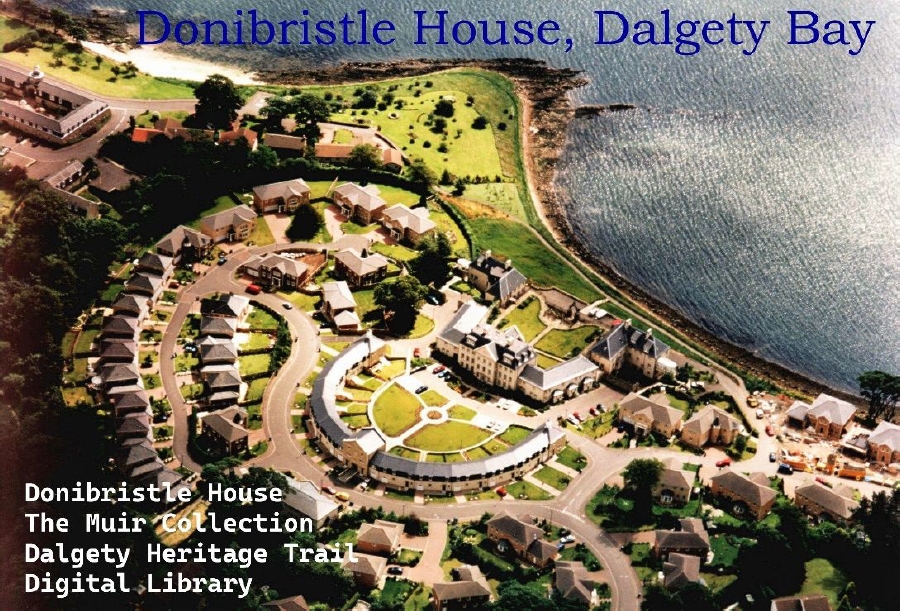
But as we all know there is a happy ending to this potted history of the house and estate. There are now thousands of us enjoying living in Dalgety Bay built by numerous developers but a special mention to our local builders Muir Homes for the final renovation to Donibristle House, which is quite spectacular.
Picture 9 is from the Muir Collection at the start of their redevelopment of the estate home and picture 10 has been donated by the George Hastie collection which shows the work in progress, but I will leave you with the final picture of the house, donated by the Muirs Family.
Pic 1
MURDEROUS MUIRTON...
Contributor – Johnathan Ellington
Before the population growths driven by the Henderson’s industrial activities, the stationing of armed forces and support staff during the lifetime of HMS Merlin/RNAS Donibristle, and finally the huge growth of the private new town of Dalgety Bay, the parish of Dalgety was very rural. Work centred on maximising wealth from the land for the major land owners.
The population was much less than even neighbouring Inverkeithing and Aberdour but people DID live in Dalgety and The Heritage Trail shall be looking at the places where lives were lived, mostly, though not exclusively, working on the land in fermtouns and cottartouns, which we will discuss in detail in later weeks. In this piece we will be looking at only one of the tiny settlements present though, a fermtoun which we shall call Muirton, the modern spelling, though it was variously also spelled Moortown, Muirtoun, Moorton and Muirtone.
Muirton can be considered as important even though it was a fermtoun of possibly no more than half a dozen
cottages as;
1) It is a rare area which was lived on, and can still be seen – it has not been developed,
2) It has a scandalous event associated with it that does not appear to have been raised in any literature and
3), It is mysteriously never mentioned in any easily obtained Earl of Moray Donibristle estate files or historical documents of the area , other than several maps.
Many people in the Bay will be familiar with Muirton Way in the Industrial Estate, but there is also a small, narrow plantation called Muirton Wood running east from Barns farm that can be seen north of Beech Avenue immediately on leaving the Bay along it. This is the area in which the Muirton settlement was. Where exactly?….well we can see from old maps that the fermtoun lay at the intersection of the track running
north/south from the east end of what is now Muirton wood with Beech Avenue. This area, early residents of the Bay may remember, was once surrounded by a small, oval shaped copse. It looks as if, from one of the early maps, that trees may have been originally planted there to protect the cottages from the worst of the weather.
Pic 2
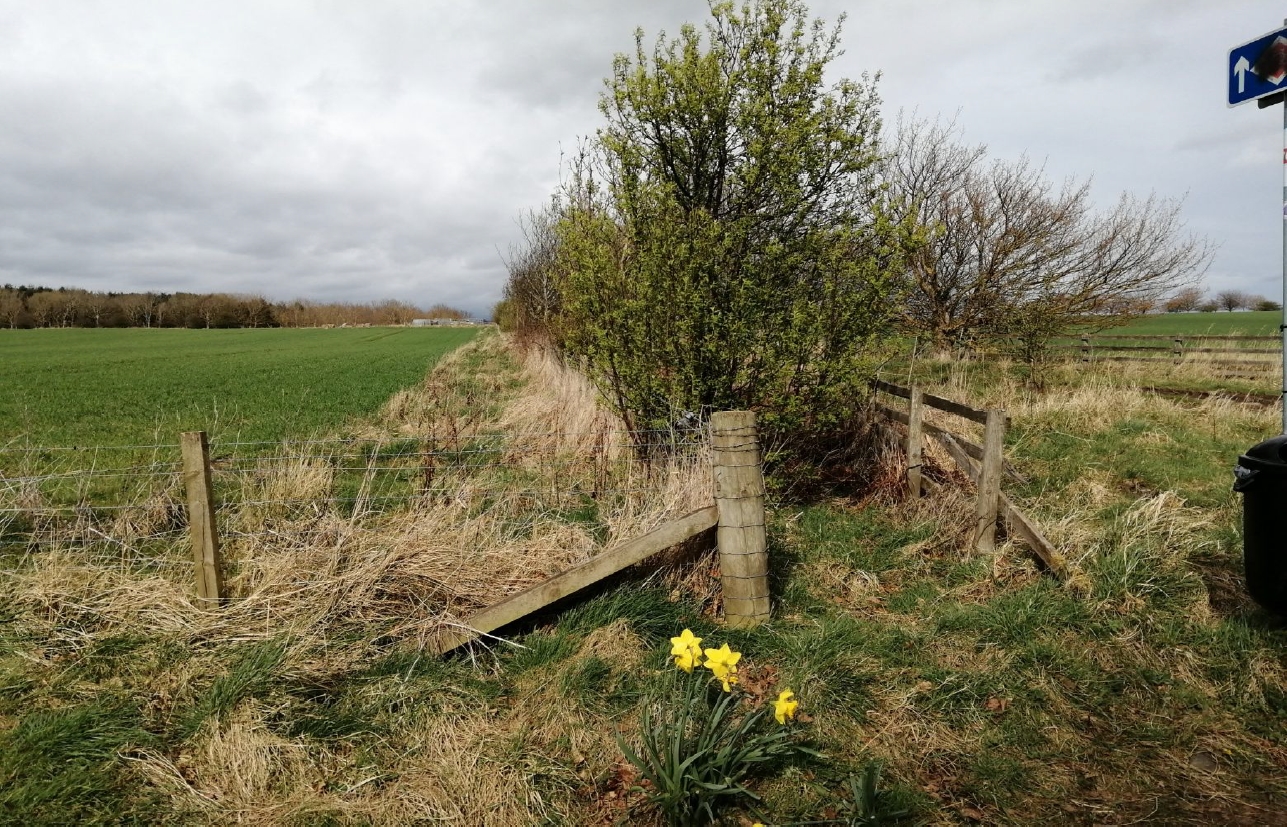
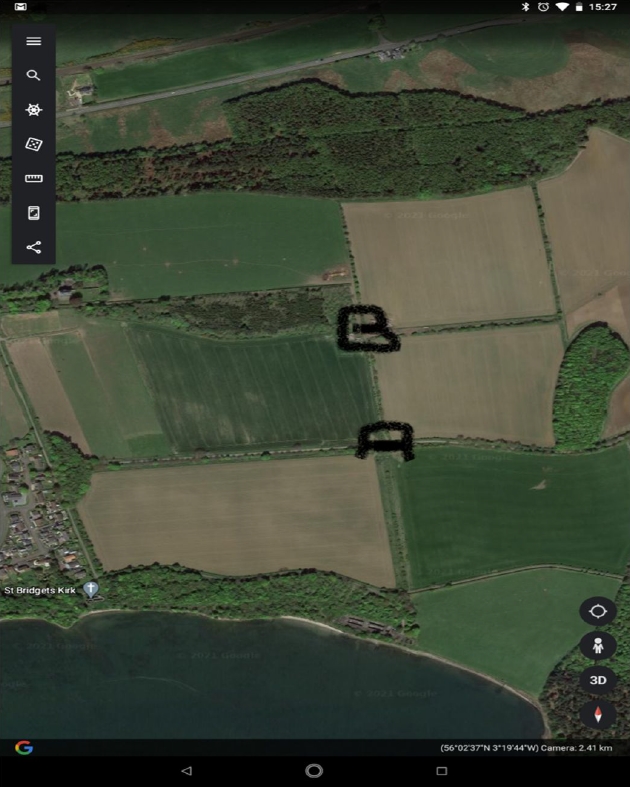
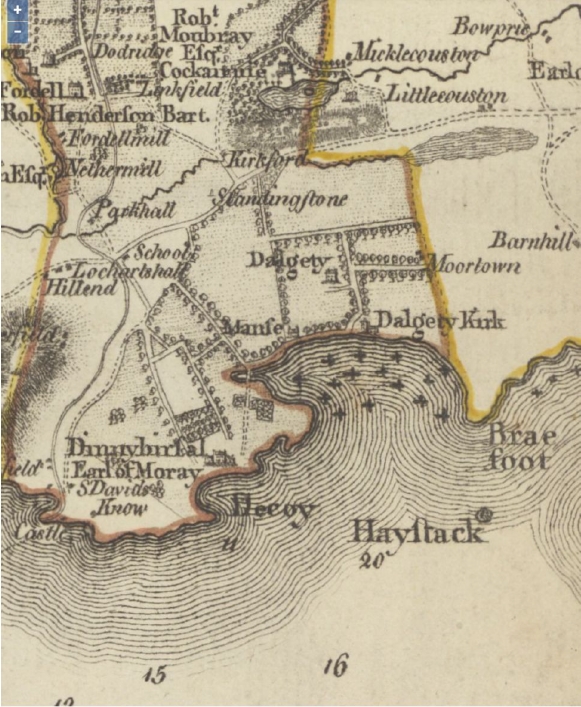
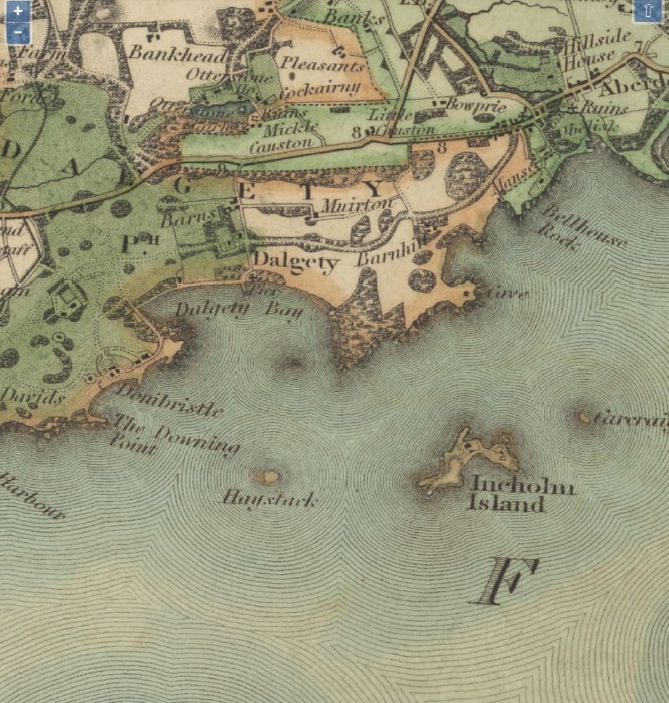
In the early 19th century, more modern, larger scale farming methods led to farming units being established with fermtouns and the related cottartouns dying away. People often moved to the growing towns in central Scotland. We can see that this process appears at Muirton as a new farming unit appeared at the North end of the track (where Barns farm has a working and hay storage area now) and the fermtoun disappeared. The farm itself was quite short lived as the farming process was then consolidated at Barns farm. See Picture1) and Picture 2). In Picture 1) the original fermtoun stood in the foreground and the more modern farm at the back, centre left. In Picture 2), a Google Earth scan, the original fermtouns’ site can be seen at A and the site of the later farm at B. Pictures 3) and 4) show, respectively, the fermtouns position in 1775 (Ainslies’ Map) and the farms position in 1828 (Sharp, Greenwood and Fowler).
Pic 3
Pic 4
Death records show 8 deaths at Muirton from 1746 to 1826, but there would have been significantly more since most records were ascribed just to Dalgety Parish. Records as late as 1826 would appear to show that there were still isolated residences in the area after Barns farms’ emergence. The fields though, would have been worked well before this date range, when the land would have been within the Dalgety Estate of the Earls of Dunfermline and, latterly, Lord Hay of Yester. There is no evidence of the Muirton name earlier than the early 18th century but
local historian Eric Simpson suggests that a place name mentioned, “The Dubbs”, in 17th century parish records may mean Muirton, as Dubbs would have indicated a muddy farm. There was apparently a trend in place naming to dispose of old Scots place names and assume more “proper” anglicised terminology. The small settlements often first developed near the baronial homes, so proximity to Dalgety House was to be expected.
And now we come to a specific event in Muirtons’ history. A Perth High Court record of a 21st September 1803 trial states;
Title: Trial papers of William Davie, residentor in Muirtoun, James Walker, residentor in Muirtoun, and William McCraw, residentor in Barns of Dalgety, all servants or late servants to the Earl of Moray, for the crime of murder.
Libelled that on the evening of 29 April 1803, William Davie, James Walker, and William McCraw enticed John Brown, late smith at Couston, Parish of Aberdour, County of Fife, to join their company and to partake of a quantity of spiritous liquors in the bakehouse adjoining to the House of Dunniebristle, Parish of Dalgety. The said Davie, Walker, and McCraw did then and there feloniously assault and maltreat the said John Brown by throwing him down on the floor, beating and bruising him. John Brown died within a few days thereafter on 3 May, his death being occasioned by the violent and cruel treatment he had received from the said Davie, Walker, and McCraw.
William Davie and James Walker failed to appear. Adjudged and declared to be outlaws and fugitives from His Majestys Laws, and put to the horn.
William McCraw pleaded not guilty. Found not guilty. Assoilzied simpliciter and dismissed from the bar.
The court Minutes reveal that all three accused were Day Labourers, ie labourers taken on for a fixed period and paid totally in cash.
To be “put to the horn” was the formal process of outlawing someone. More recently it was used for debtors rather than those absconding from serious charges. The process involved a horn being sounded three times in the local market town, which in this case would be Inverkeithing. There exists a “Register of Hornings” (yes seriously….), held by the Registers of Scotland but they have not responded yet to requests for information.
Earlier, on the 7th May, John Davie (a relation of William Davie?) who was the baker and brewer to the Earl of Moray, was imprisoned in the Tolbooth, Inverkeithing, accused of the murder or culpable homicide of John Brown. There is no record of him being put to trial, so it may be reasonable to assume that he was released.
We can find no further record of the fate of the outlaws, they certainly weren’t tried again at the High Court, but genealogy records reveal that a William McCraw was born in Aberdour on 28/4/74, married a Helen Robertson in Dalgety on 6/7/1811 and proceeded to have 4 children with Helen in Aberdour, one of whose names was Hugh, the same as his fathers’ name on his own birth certificate, so we can be reasonably confident that all the records might refer to the same person. This might just indicate that William McCraw was able to pick up the pieces of his
life within the community after his acquittal.
A William Davie was married to Jannet Walker and had a child, also William, in Dalgety on 6/11/1801. We can find no record of any of these after the date of the trial. This leaves a unsettling feeling that William might have left his wife and young child in the lurch when he absconded.
A James Walker was born in Dalgety on 1/11/72, but there is no record of him thereafter. There are several possible John Brown’s in Aberdour records, and the relevant one cannot be isolated, though interestingly, one of these possibilities was married to a wife with the surname of McCraw.
Soon after the date of the trial, the fermtoun of Muirton faded, to be replaced by the more modern farming unit, which itself, as we have said, was soon superceded by Barns farm. There must be some suspicion that the lack of documentation of the fermtoun, farm or court case in newspapers or easily obtainable Earl of Moray papers is possibly due to some embarrassment to the estate, with an attempt to clamp down on information flow. Perhaps, once covid restrictions are lifted, the Earl of Morays’ records at Darnaway may provide further information.
Finally, poor John Brown appears to have been totally forgotten, unlike his fellow, more celebrated Donibristle murder victims, the “Bonnie Earl” of Moray, who died with his Sheriff, Dunbar, more than 200 years earlier. Moray had a well known song written about him and his mother was powerful enough to create a stir in court and with the population, but his family, like Browns’, never received true justice for his murder.
We’d be delighted to receive thoughts and suggestions from any Scots legal history or family history buffs who can help shed any further light on the aftermath of John Browns’ death!
George & Harriet Meiklejohn
Contributor: Helen Hampson Picture Credits George Meiklejohn
My Dad, George Meiklejohn, started working for the MOD at Donibristle Airfield when he was 23. He will be 92 this year so it was a long time ago!
He was one of approximately 20 grounds men employed to maintain the area. When the base closed, he was transferred as a gardener to look after the grounds and gardens at the Donibristle houses.
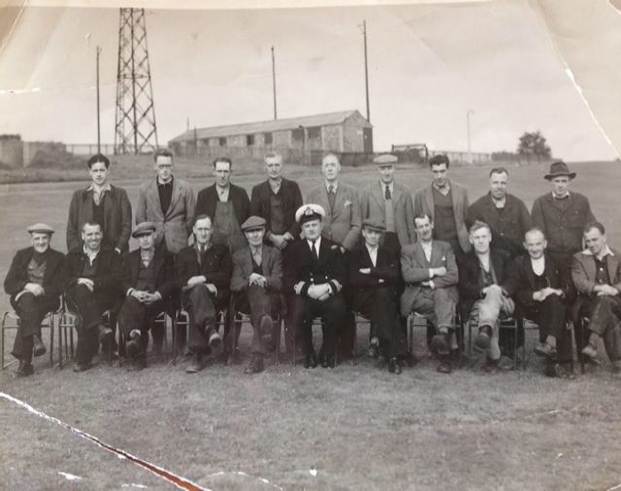
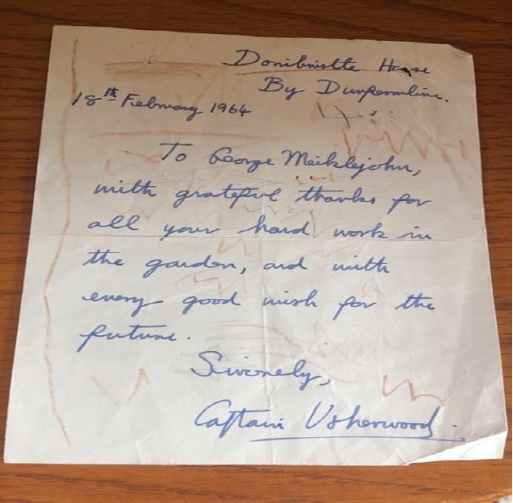
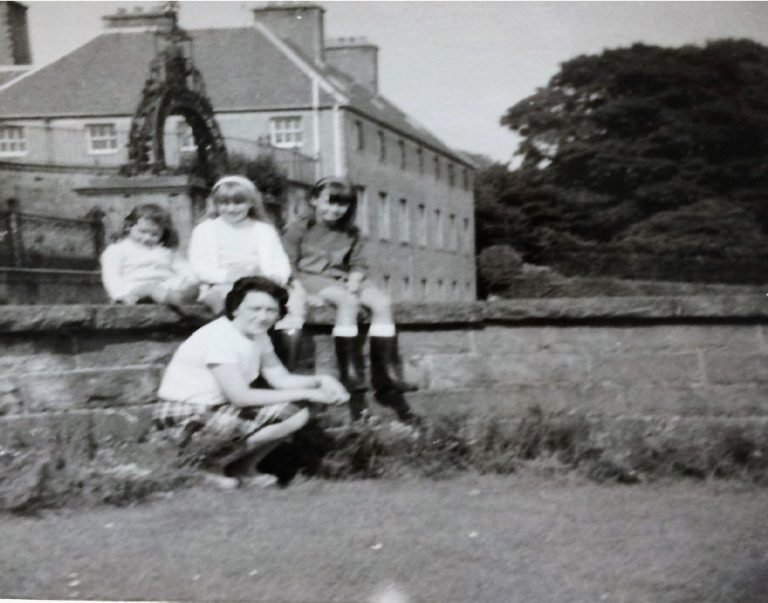
He remembers the first house being built in Dalgety Bay.
He has fond memories of his time there and enjoyed cutting the grass, the cricket pitch and hedges and looking after the beautiful sea court walled garden which had a summer house from which to enjoy the view across the water. The sun dial remains in place today.

Among the Captains who stayed in the houses he remembers Captain Murray, Captain Toby and Captain Usherwood who all travelled to Rosyth Dockyard every day. There were Christmas and Summer parties for the employees (and sometimes their children) on the estate
which were enjoyed by all.
When my sister and I were young we would go and stay in the HMS Cochrane house during the summer holidays, and it was such an adventure. There were the dungeons under the sea court and thick glass peep holes which provided the only light into the damp and dark under the ground. The old kitchen had a gallery above it from which the chief chef in days gone by would watch to make sure his minions were working hard. The kitchen had an open fire with a spit and an old stone sink.
There were push buttons in all the upstairs rooms and bells would ring in the small kitchen to let the servants know they were being summoned. There were rooms with adjoining doors and at the top of the house small box rooms where the servants used to stay. Inside and out there were so many places to explore.
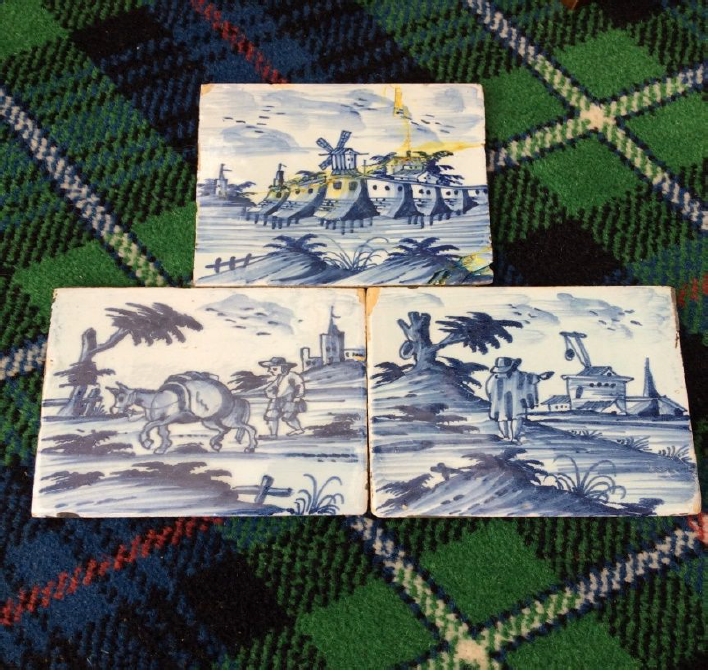
Dad had a small room to work from which had been completely tiled in blue and white tiles at some point and they were cemented into the walls – visitors would be shown the room and many speculated on their origin – some believed them to be Dutch.
When the houses were no longer used by the MOD in 1976 Dad moved briefly to Rosyth Dockyard then to Bendammer House outside Burntisland were he continued his gardening career until he retired after 37 years of service.
He still worked at weekends at the Donibristle Houses which were then being used by Barrett the builders. He kept the grounds and tended the hedges and gardens. He also planted the roundabouts at the top of the Wynd and beside the Church. He planted the trees which line
the Wynd and often tells us he was paid £6 per tree!
We were all proud when he was awarded the Imperial Services Medal for long service by the Air Vice Marshall at Pitreavie.
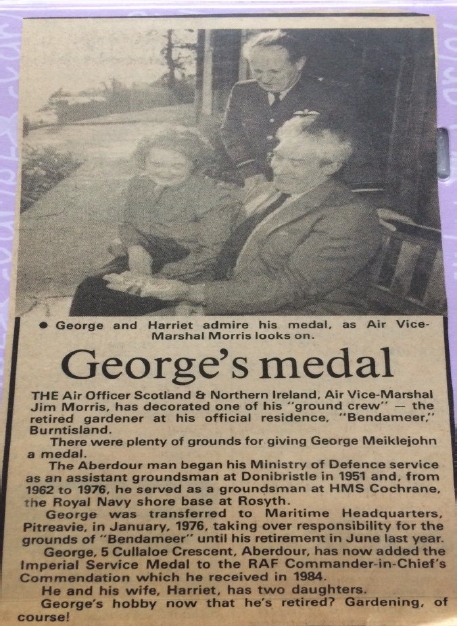
Dad remembers being with Air Vice Marshall Brook when he took the call to tell him about the Piper Alpha disaster and the Lockerbie bombing.
In addition to his work as a gardener Dad was beadle at St Fillan’s Church in Aberdour for many years and spent many a Saturday night stoking the boiler under the organ room to make sure the church was warm for the Sunday service – I remember waiting at the top of the steps in the dark in the graveyard waiting for him to reappear! He would ring the bell before the service and carry the Bible into the church in front of the minister.
The summer service at Inchcolm Island was another favourite – transporting hymn books in the small boat for the service and then back again afterwards. We were always in trouble for dangling over the sides!
Happy memories from times gone by!

Dalgety Bay Oysters!
Contributor – Heritage Trail Brian
Well, who knew that the River Forth was once recognised as having the best oysters in the land, in fact native oyster beds used to cover an area with a combined size of modern Edinburgh. The Forth estuary, at its peak at the turn of the 19th century, was producing over 30 million oysters a year and exporting the molluscs across Europe as well as the UK and that the Earl of Moray’s Donibristle estate was very much involved. What a turnaround to today where we are advised against even digging up worms for bait in Dalgety Bay.
Oysters have been harvested for centuries and were not always regarded as the delicacy that they are today. However, not just here on the Forth, but across the UK the oyster beds were over exploited in the 18th and 19th centuries and in the case of our river, oyster fishing stopped before 1920 and indeed were classed as extinct on the Forth in 1957. This was a combination of overfishing and poor water condition.
We shouldn’t criticise our coastal communities from the past nor indeed view them through the prism of what we know today in terms of marine preservation. Life was hard, and poverty was everywhere and if you lived a ‘hand to mouth’ existence and near to the coast and could pick up whelks, mussels, and a little further out oyster then of course you would.
It was no different for our fishermen, through the years they would chase the catch and at times put their lives at risk at the mercy of the sea. So, who can honestly blame the folk when opportunities arose closer to home.
The industrial revolution brought opportunities for fishing communities like Newhaven, where the chance to expand commercially and export to markets far away opened for them. The Newhaven oyster beds stretched from Inchkeith to their home port and the villagers were in an unusual position of having the right to fish the beds:
“The beds belonged to the city of Edinburgh and were given in charge to the free fishermen of that village”.
This was legally challenged for many years. As it was in those days the estate owners would always try and seize and maximise the opportunity of mineral rights within their own boundaries and not surprisingly, fought to control the rivers or seas around their shores.
Legislation was also strengthened over the years both to confirm ownership and rights to fish our waters and latterly moving towards protecting the natural resources and it’s at this point I can introduce how it was controlled in the Dalgety Parish and where our Earl of Moray was involved.
The Oyster Fisheries (Scotland) Act 1840 Chapter 74 contained these points (in plain English):
[1.] Penalty for stealing oysters or oyster brood.
If any person in Scotland shall wilfully and knowingly take and carry away any oysters or oyster brood from any oyster bed, laying, or fishery, being the property of any other person or persons, body corporate or politic, and sufficiently marked out or known as such, every such offender shall be deemed guilty of theft, and being guilty thereof shall be liable to be sentenced to imprisonment not exceeding the term of one year
[2.] Penalty for using dredges within limits of oyster fisheries.
If any person shall unlawfully and wilfully use any dredge, or any net, instrument, or engine whatsoever, within the limits of any such oyster fishery in Scotland, for the purpose of taking oyster or oyster brood, although none shall be actually taken, or shall, with any net, instrument, or engine, drag upon the ground or soil of any such fishery, every such person shall be deemed guilty of an attempt to commit theft, and being convicted thereof shall be liable to be punished by fine or imprisonment, or both, as the court shall award, such fine not to exceed level1 on the standard scale and such imprisonment not to exceed three calendar months.
So, the law is in place to protect the commercial rights but where does that leave Newhaven, well section 4 goes on to say:
[4] Act not to prevent persons exercising right they now enjoy.
Provided always, that nothing in this Act contained shall prevent or be construed to prevent any person or persons from exercising any right which may now be lawfully exercised within the limits of any fishery.
The story then moves on to the Earl of Moray who wanted to have the rights around the Dalgety Parish. Which he did through ‘The Oyster and Mussel Fisheries Orders Confirmation Act, 1869’.
Now, if you have been following the page you will know that the Hendersons had the rights to the sea at St David’s:
“4 acres of ground near that rock called saint davies castle in lands of knows and Seafield in the parish of Dalgety, together with a road of 24 foots of breadth with the sea and seaware opposite the said lands”.
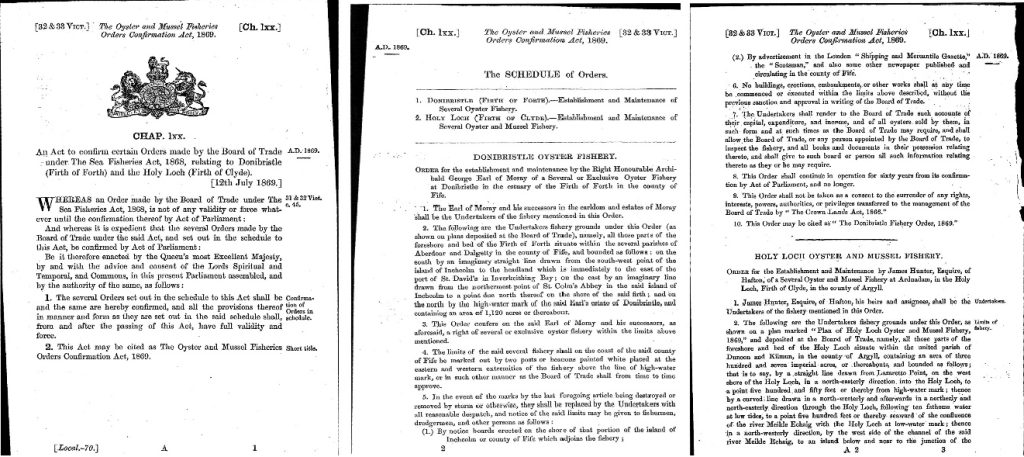
Pictures 1-3: The Oyster and Mussel Fisheries orders Confirmation Act, 1869
On pictures 1-3 you can see that the Earl had to mark out his boundary with two white beacons at the high-water mark on the eastern and western extremity of the fishery, but not only did he reserve rights over Dalgety but Aberdour too:
“All those parts of the foreshore and bed of the Firth of Forth situate within the several parishes of Aberdour and Dalgety in the county of Fife, and bounded as follows: on the south by an imaginary straight line drawn from the south-west point of the island of Inchcolm to the headland which is immediately to the east of the port of St David’s in Inverkeithing Bay; on the east by an imaginary line drawn from nethermost point of St. Colm’s Abbey in the said island of Inchcolm to a point due north thereof on the shore of the said firth; and on the north by the high-water mark of the said Earl’s estate of Donibristle, and containing an area of 1,120 acres or thereabout” see map 4.
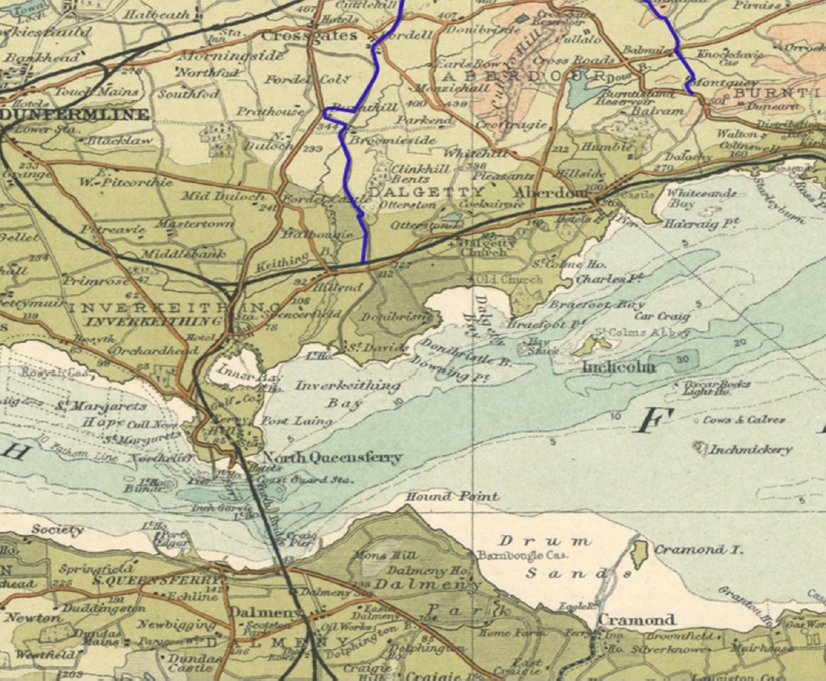
Picture 4: Coastal map
The next Act of Parliament to catch my eye was the ‘Sea Fisheries (Shellfish) Act 1967 which contained in Schedule 3 the repealing of enactments including Chapter 32 & 33 Vict. C.31 which had the Earl’s “The Oyster and Mussel Fisheries Orders Confirmation Act 1869, see picture 5.
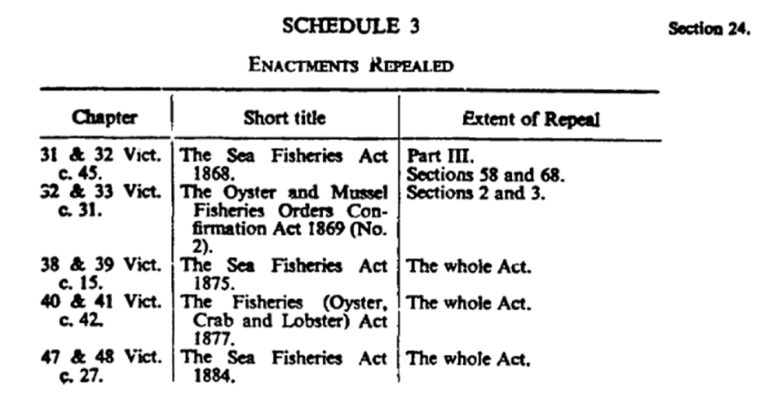
Picture 5
So, the Earl lost his oyster fishery rights in 1967, as we were building the town of Dalgety Bay.
The good news is that wild oysters were rediscovered in the Forth in 2009.
According to a BBC news article in 2009, Stirling University scientists discovered wild oysters in the firth which might be farmed commercially. Dr Elizabeth Ashton of the University of Stirling’s Institute of Aquaculture discovered the oysters at a secret location. She recalled:
“I put my wellies on and my raincoat and was walking along the slippery stones by the water’s edge many times and then out of the corner of my eye I saw what I thought could be an oyster and the tide was still going out, so I had to wait a while and yes it was a specimen of a native oyster. This has been followed up in 2021 with the announcement that pioneering work to create thriving seagrass meadows and native oyster populations in the Firth of Forth has begun.
And even better news, in 2021 the Coastal Communities Network wrote about the £2.4 million project, Restoration Forth, which will restore four hectares of the all-important seagrass that supports so much biodiversity, including oyster reefs, that will improve the local marine ecosystem
and help to tackle climate change.
To finish on, whilst doing the research I came across this chant that the Newhaven fisherman used to recite whilst fishing:
‘The herring loves the merry moonlight,
The mackerel loves the wind;
But the oyster loves the dredger’s song,
For he comes of a gentle kind.’
Sources
Hansard- UK Parliament
The National Archives
BBC News
Coastal Communities Network
Nature Scot
Oysters and the Firth of Forth